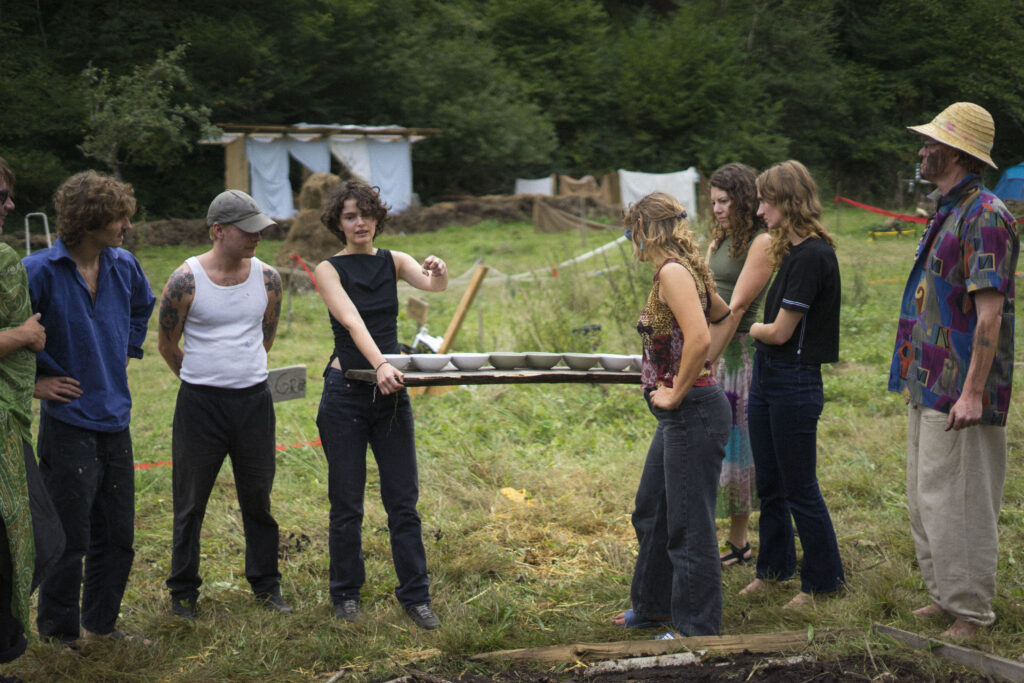
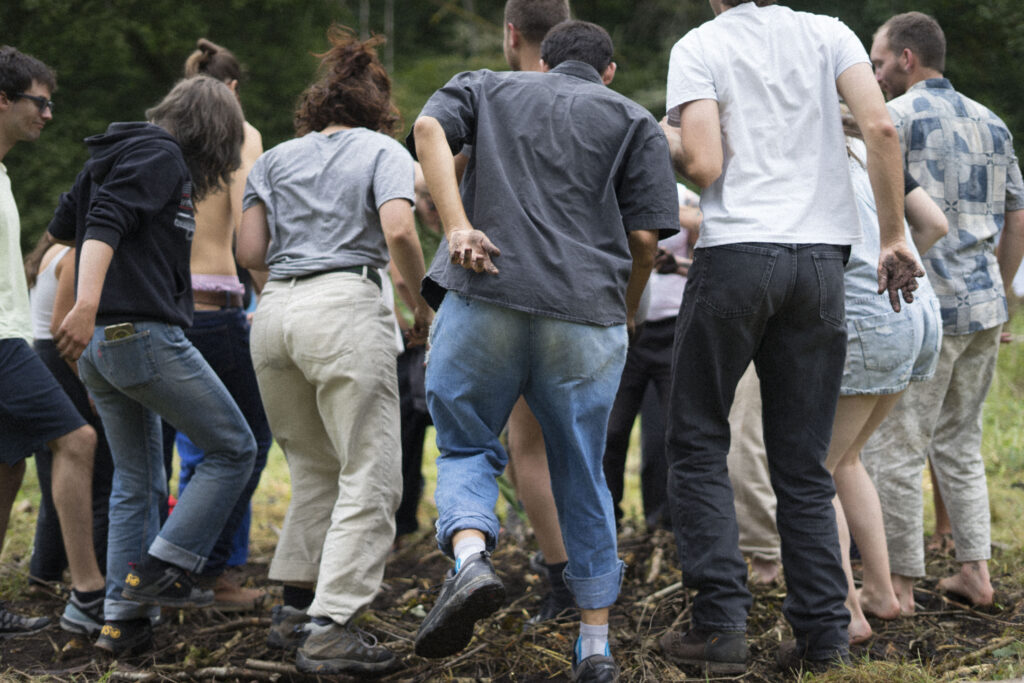
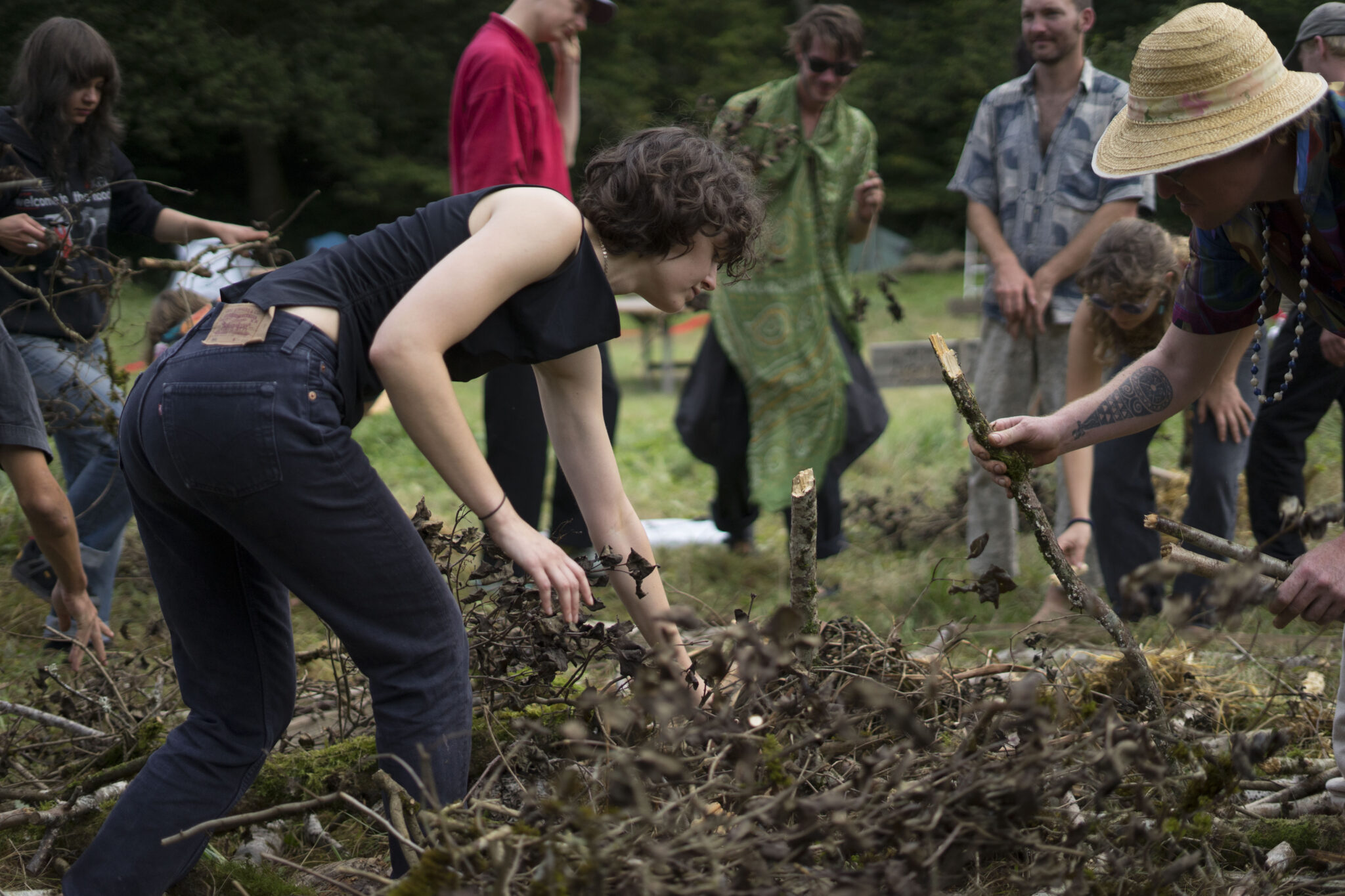
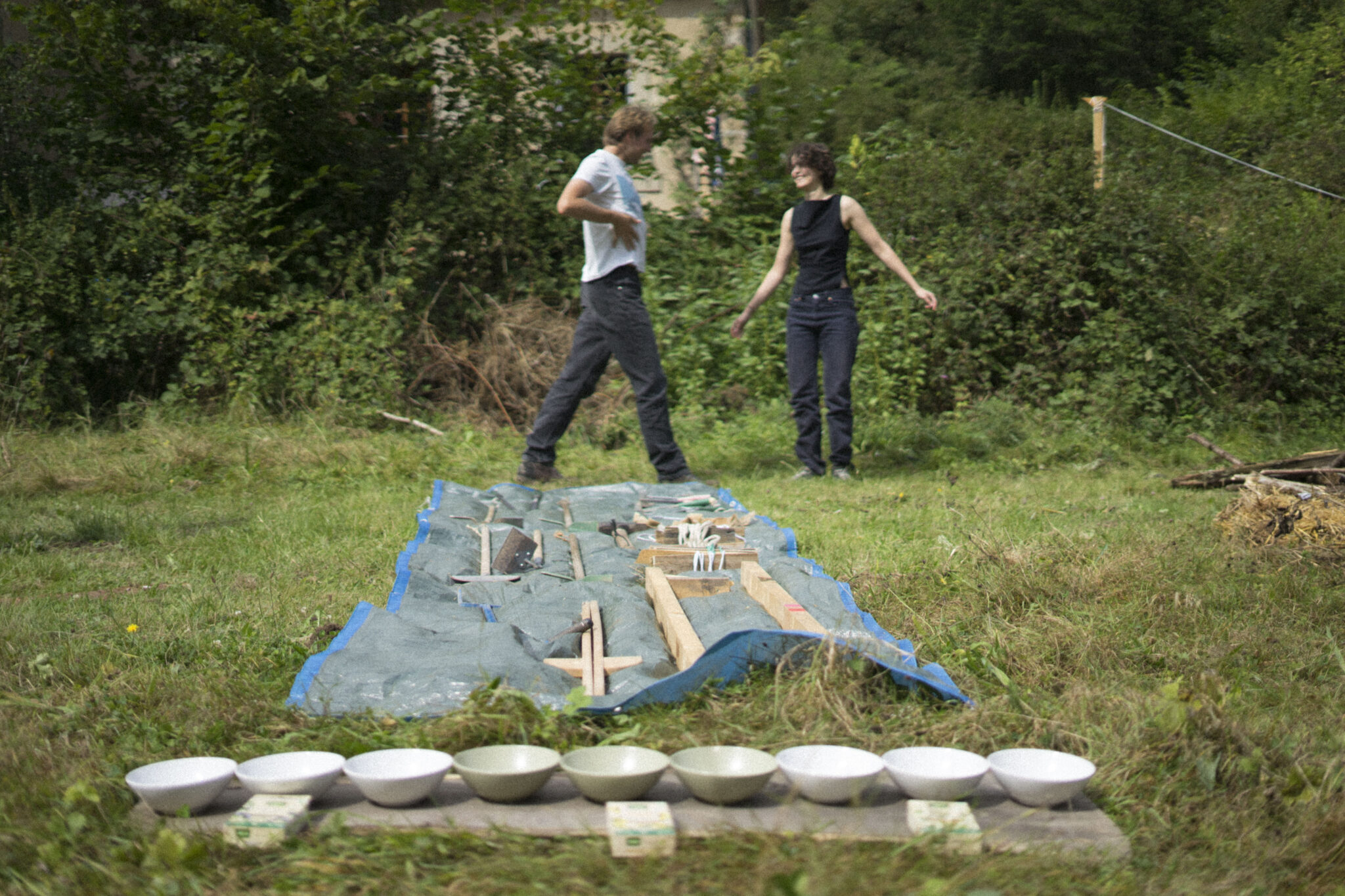
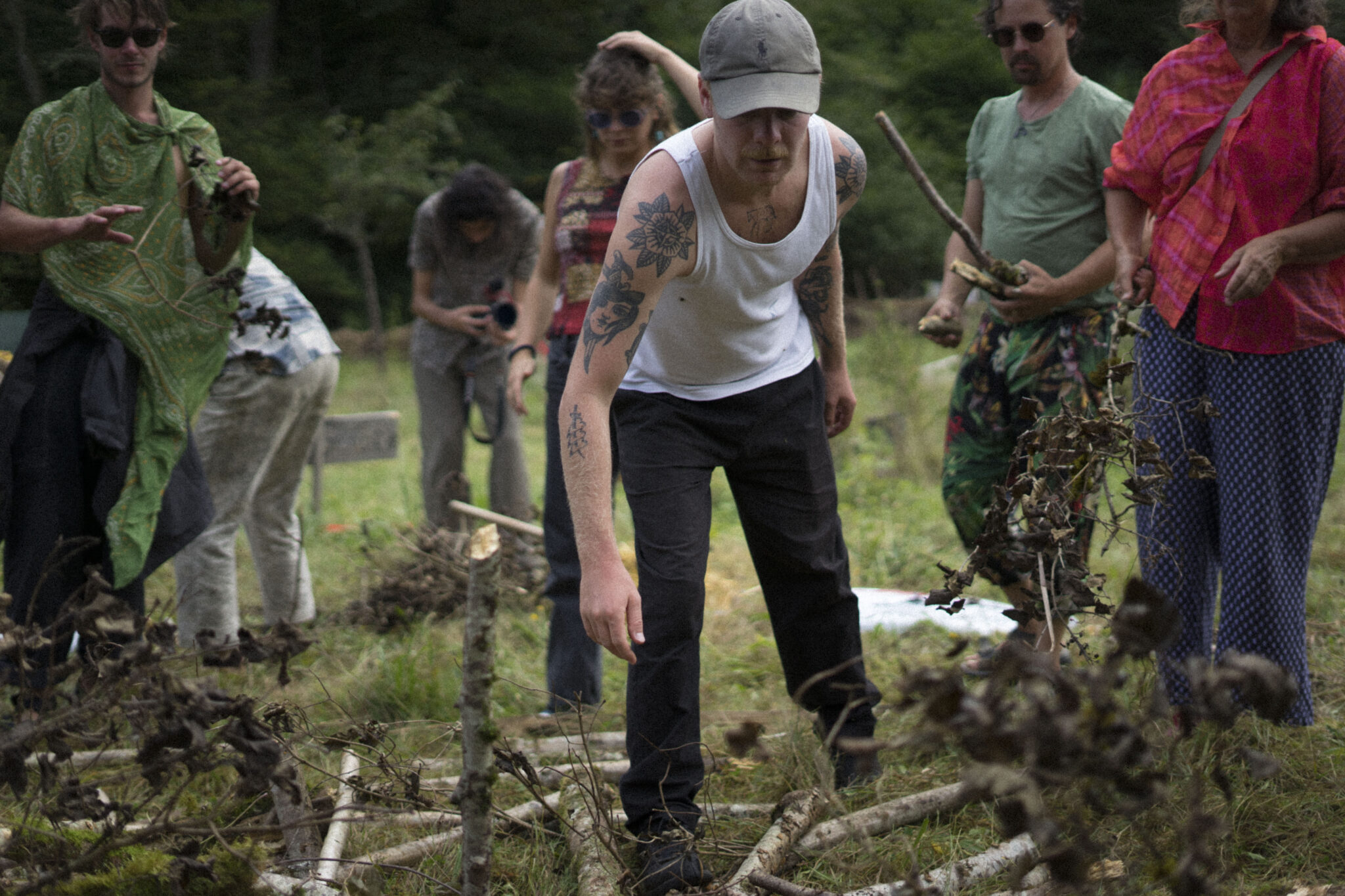
Becoming Worm explores how we can collectively engage our bodies to create fertile soil. Guided by rhythm and music, participants are invited to layer compostable biomass to form a hugelkultur — a horticultural technique that enhances soil fertility and water retention. Through this movement, we become agents of soil health, harnessing the power of dance and care, much like worms do.
Hügelkultur is a horticultural technique where a mound constructed from decaying wood and other compostable biomass plant materials is later planted as a raised bed. Considered a permaculture practice, advocates claim that the technique helps to improve soil fertility, water retention, and soil warming, thus benefitting plants grown on or near such mounds.
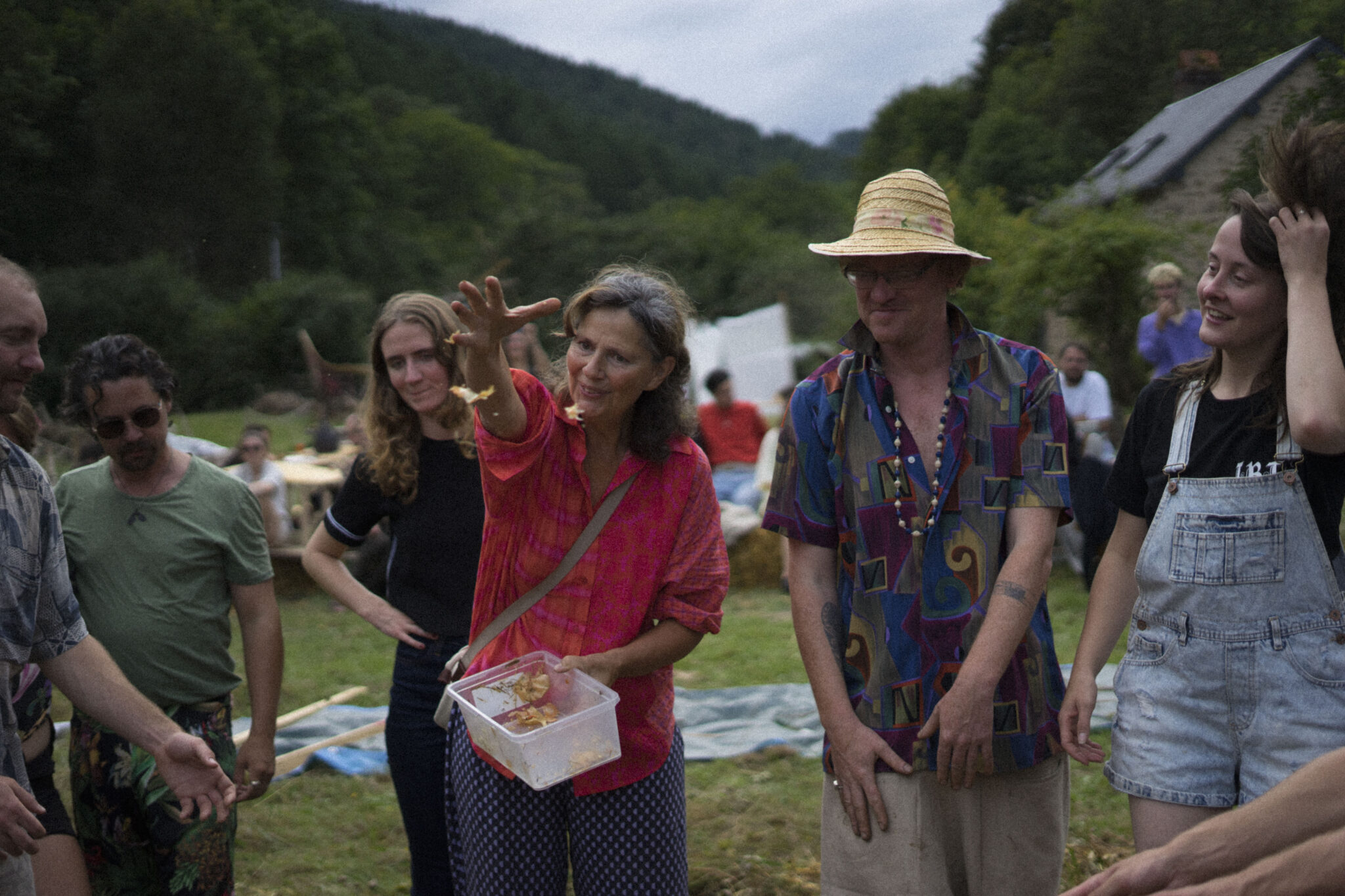
Seeds of mustard, phacelia and clover were planted, preparing the bed for autumn. These cover crops will prepare the soil until it is being planted in spring. While phacelia supports the microbiome population, adds nitrogen to gardens in the form of nitrates, improves arability of the garden and attracts pollinators. Yellow mustard is a natural biofumigant, reducing pests and diseases. Its deep roots enhance water infiltration. Clover is also a nitrogen-fixing crop and its roots dig deep preventing erosion. All these creates a fertile environment for future crops.
TYPE: Workshop, Nature Based Solutions
SUPPORTED: LaTrappe
INITIATED BY: Alicia Ville,Riel Bessai
The results from this research on collective engagement in building nature based solutions for ecosystem regeneration were further explored under a research concluded format zine. Learn more about it by consulting our publications.
Reach out if you are interested in hosting a workshop on how to build hugelkultur.